
What Should the CBC Be?
Jessica Johnson, Emma Wilkie, Chris Ross
doi.org/10.66536/what-should-the-cbc-be_2025Executive Summary
This report presents findings from a two-year study drawing on best practices in public service media from within Canada and 17 other countries, informed by consultation with media and public media experts and by the national survey "Do We Need the CBC?" It examines the current role of public media in the Canadian media landscape, assesses its relevance, and proposes recommendations to align the CBC/Radio-Canada and its resources with the needs and expectations of Canadians today, with special emphasis on the rising role of public media in emergency preparedness and public safety amid the climate crisis and geopolitical threats.
The research finds broad support and utility: 78% of Canadians want the CBC/Radio-Canada to continue, especially if it addresses major criticisms levelled against it, a finding consistent across political lines, ages and regions. Funding cuts, technological developments and environmental conditions such as the decline of local journalism mean the CBC/Radio-Canada is no longer universally accessible to all Canadians, and it will better serve the country when appropriately funded and mandated around audience needs, including the news-avoidant audience. Canada has funded its public media service at around $33 per capita today, far below the international average of $79 per capita, and while the federal government committed to maintaining funding in 2025, the CBC/Radio-Canada's budget needs to be indexed to the scope of its mandate, with regular demographic reviews to determine what content Canadians require. Mandate reviews should be regularly scheduled (e.g., every five or 10 years) and held outside election cycles, conducted by cross-partisan or nonpartisan committees involving public consultations or in-depth demographic surveys — the last full mandate review before 2025 was conducted in 1991. The report also calls for prioritizing public safety by strengthening and formalizing the CBC's emergency communications and crisis-response role, restoring universality of access by addressing the digital divide, investing in local journalism (more than half of Canadians are dissatisfied with their local news options, a figure that rises outside cities and towns), building meaningful representation, and investing in media literacy programs. Finally, it recommends rebuilding trust and transparency through more public engagement outside regulated CRTC channels, regional advisory councils, and depoliticizing the appointment of the CBC/Radio-Canada president and board.
Adequate funding is key to a stronger CBC/Radio-Canada, but the research shows a population is more willing to financially support its public media service when it reports higher trust in it — meaning these recommendations should be considered interconnected and pursued holistically.
Key Takeaways
- 78% of Canadians want the CBC/Radio-Canada to continue, especially if it addresses major criticisms, with support across political lines, ages, and regions.
- Canada funds its public media service at approximately per capita, compared to an international average of per capita among comparable countries.
- 79% of Canadians say the CBC/Radio-Canada is equally important or more important than before in the digital age.
- Only 11% of Canadians would defund the CBC/Radio-Canada outright; 47% of Conservative respondents would keep or increase funding.
- The last full mandate review of the CBC/Radio-Canada before 2025 was conducted in 1991, over three decades without a comprehensive review.
Related Publications
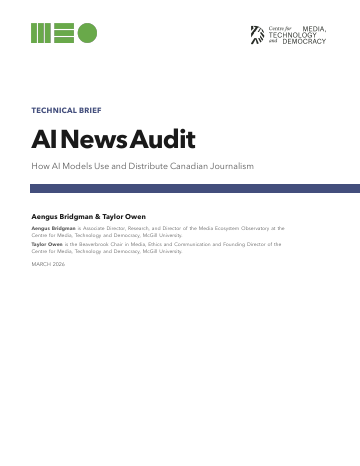
AI News Audit: How AI Models Use and Distribute Canadian Journalism
Read more
Canada's News Bargaining Code: An Unabridged Account of C-18
Read more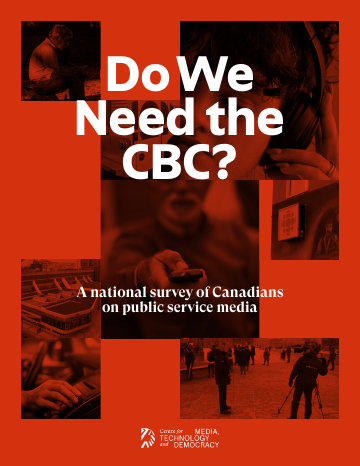
Do We Need the CBC?
Read more