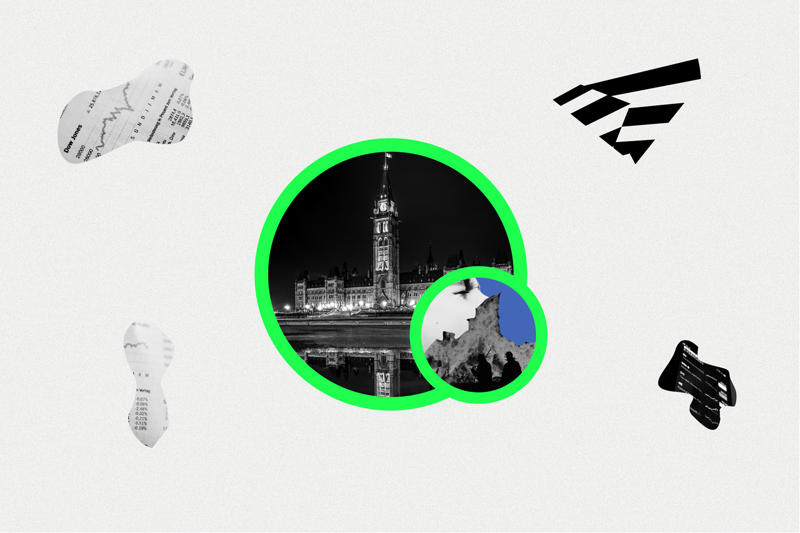
Polarization as the Technological Goal – Not the Error
Wendy Hui Kyong Chun, Sonja Solomun
doi.org/10.66536/polarization-technological-goal_2023Executive Summary
In this interview, Wendy Hui Kyong Chun, in conversation with Sonja Solomun, reflects on the state of polarization in Canada today, drawing on her work on homophily, mis- and disinformation, and the question of authenticity. She argues that we must challenge the simple separation between on- and offline spaces, especially given the increasing importance of technology to social and political life, and that doing so helps explain how social media platforms operate as "deep-fake versions of reality" that alter how we tell truthful, nuanced, and complex stories about our past, present, and future.
Chun contends that polarization should be understood as a technical goal of current commercial social media platforms and recommendation systems, not an error: these systems personalize content based on the actions of others determined to be "like you" within a network neighbourhood, making segregation the default. She traces this logic to the concept of homophily, showing through historical housing-segregation research how similarity-based clustering was documented and later naturalized. Networking algorithms, she argues, can similarly create clusters bound together by shared attraction to a common opposite, and comfort-based justifications for homophily do not hold, since Frances Haugen's testimony showed that narrowing Facebook's feed to friends and family made it more toxic rather than less.
Chun cautions against depoliticizing disinformation and polarization by treating them as purely technological or media problems rather than historically constituted political and racial ones, arguing that technical fixes to political problems do not work and that fact-checking alone is insufficient since corrections and 'fake news' reach different audiences and can even generate new interest in debunked stories. She points to work at the Digital Democracies Institute and the Data Fluency Project on authenticity and mis/disinformation, and argues that policy responses must move beyond automatic detection toward transparency, accountability, and empowerment, distinguishing homophily from genuine community and calling for the kind of cross-difference engagement that democracy requires.
Related Publications
Building a Media Ecosystem Observatory from Scratch: Infrastructure, Methodology, and Insights
Read more
Can-PolNews: A Multi-Platform Dataset of Political Discourse in Canada
Read more
Facebook’s Safe Harbour for Hate Speech?
Read more